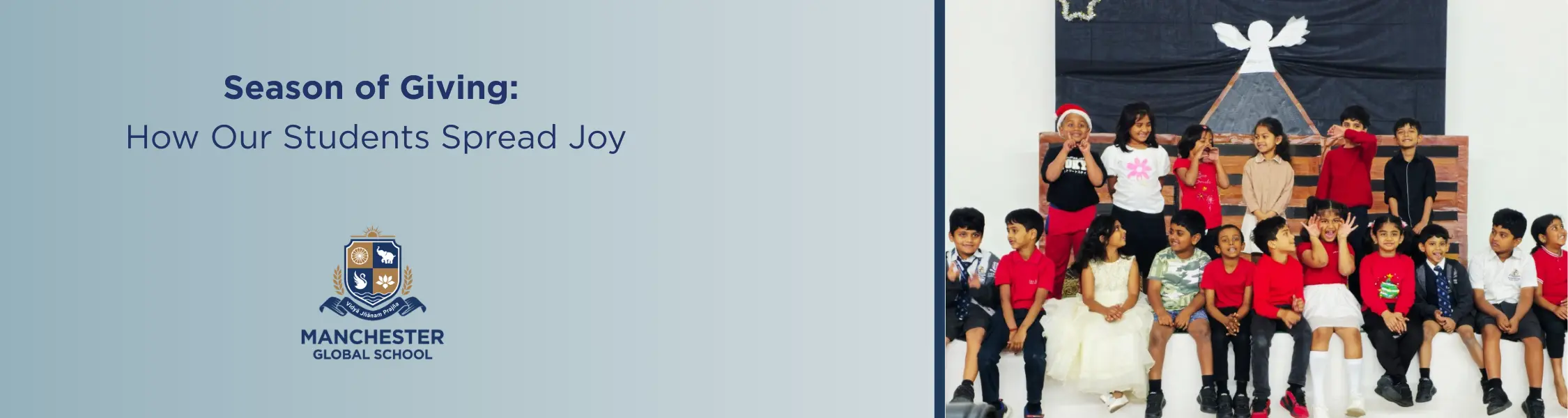
The Season of Giving: How Our Students Spread Joy

Feb 02, 2025
During the Season of Giving, Manchester Global School students turn lessons into action— organising charity drives, visiting communities, and practising value-based learning to spread kindness through service.
“The happiest people are not those getting more, but those giving more.” — H. Jackson Brown Jr.
Season of Giving: How Our Students Spread Joy
Every year, the festive season transforms our campus into a place where compassion shines brighter than any decoration. The Season of Giving is more than an event— it’s a living lesson in empathy, responsibility, and community.
From planning charity drives to visiting local communities, students turn learning into meaningful action. This blog celebrates their journey where giving becomes both a lesson and a lifelong habit.
Why Compassion Matters in School Life
Education is not complete without character. At Manchester Global School, values such as compassion, empathy, and social responsibility form the foundation of true success.
Through acts of giving, students learn teamwork, leadership, and emotional intelligence— lessons that no textbook can fully teach.
“Giving isn’t about what we lose—it’s about what we gain: perspective, purpose, and the joy of connection.” — Manchester faculty member
The Manchester Approach: Value-Based Learning + CSR
Compassion is not an extracurricular activity at Manchester Global School—it’s part of our DNA. Students identify real-world issues, collaborate with NGOs, and design outreach programs through structured CSR initiatives.
- Winter Warmth Campaigns: Collecting blankets and clothing
- School Supply Drives: Providing books and stationery
- Health & Hygiene Kits: Supporting shelters and community centres
Through these efforts, students learn that giving is not seasonal—it’s sustainable.
Student Initiatives That Make a Difference
- Charity Drives: Each grade plans goals, logistics, and awareness campaigns
- Community Visits: Reciprocal learning at shelters and senior homes
- Skill-Share Sessions: Older students tutor and teach digital skills
A Closer Look: Planning a Charity Drive
- Identify the need: Research partners and define clear goals
- Plan logistics: Timelines, collection points, volunteer roles
- Execute & reflect: Present results and learning reflections
What Students Gain
Service projects build confidence, communication skills, and a sense of agency. Teachers report stronger collaboration and purpose-driven learning across classrooms.
Global Perspective: Giving Beyond Borders
Compassion knows no borders. Through virtual drives, cultural exchanges, and global awareness campaigns, students collaborate with partner schools abroad—strengthening global citizenship, a key IB pillar.
How Teachers Integrate Compassion into the Curriculum
- Literature lessons exploring empathy and moral courage
- Science projects focused on sustainability
- Economics studies on social entrepreneurship
By linking academics with service, compassion becomes a lived experience.
Impact Report Snapshot
- 1,200+ volunteer hours contributed
- 500+ care kits distributed
- 6+ active NGO partnerships
- 3 international collaborations
How Parents Can Inspire Compassion at Home
- Maintain a gratitude journal
- Volunteer together as a family
- Donate unused toys or clothes
- Celebrate everyday acts of kindness
“I learned more about planning in three weeks of our drive than in a whole semester of group projects.” — Student Leader
How Parents and Alumni Can Join
Parents can mentor teams or support initiatives, while alumni contribute skills, guidance, and long-term NGO partnerships.